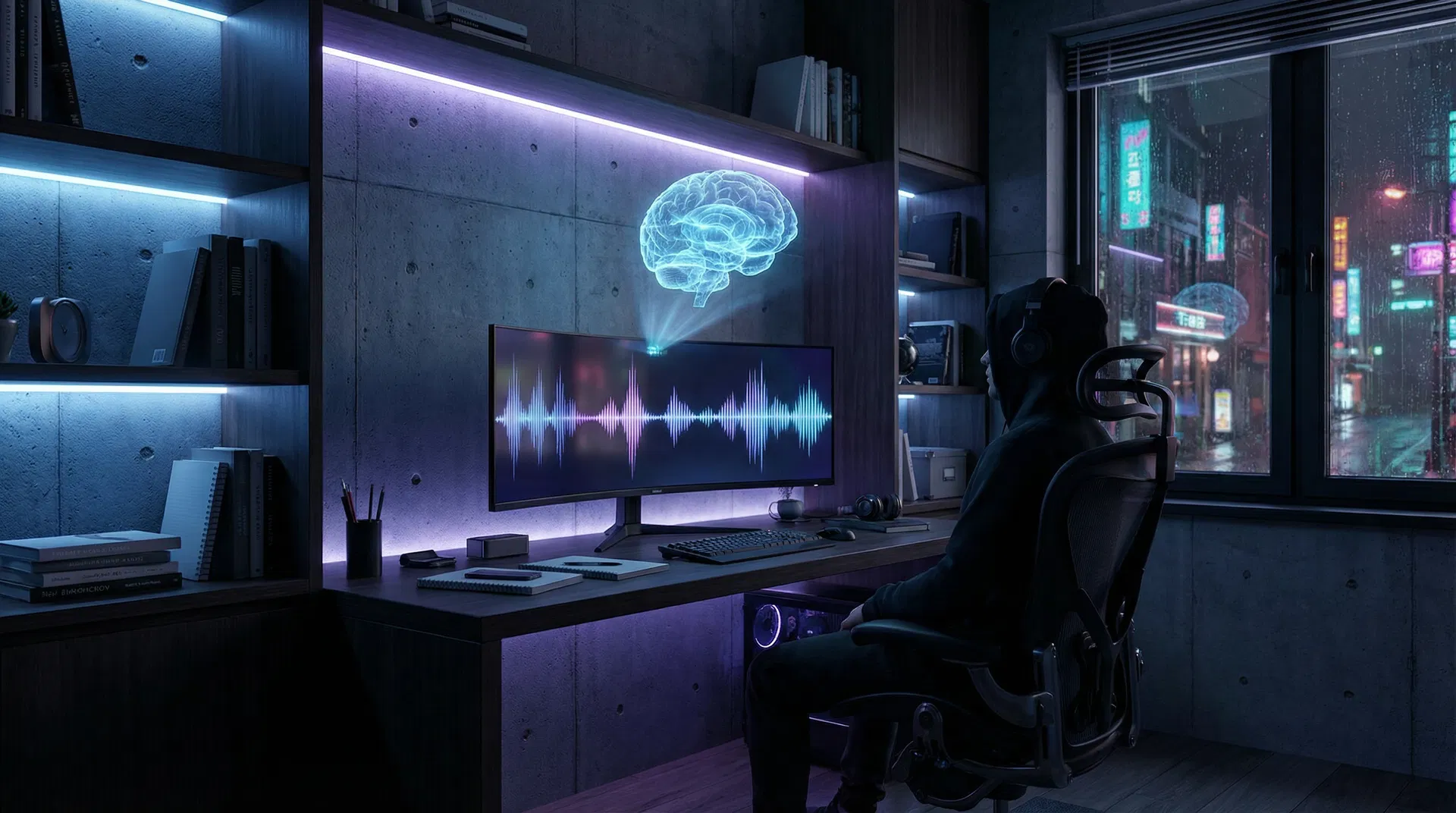
Wir kennen das alle. Du setzt dich an die Arbeit, setzt deine Noise-Cancelling-Kopfhörer auf und startest "White Noise for Focus". Zehn Minuten lang ist es großartig. Die Welt verschwindet. Aber dann passiert etwas Seltsames. Dein Gehirn fängt an zu jucken. Die Stille (oder das statische Rauschen) wird zu ruhig. Du fängst an, dein Handy zu checken, aus dem Fenster zu schauen oder dich plötzlich daran zu erinnern, dass du jetzt sofort Spülmaschinentabs kaufen musst.
Wenn dir das bekannt vorkommt, hungert dein Gehirn vielleicht nach Komplexität.
Als Musiker, der Jahre damit verbracht hat, sowohl klassische Strukturen als auch Jazz-Improvisation zu studieren, ist mir ein faszinierendes Muster aufgefallen: Die Menschen, die mit "traditioneller" Fokus-Musik (wie Stille oder flachen Drones) am meisten zu kämpfen haben, sind oft diejenigen mit den aktivsten Köpfen.
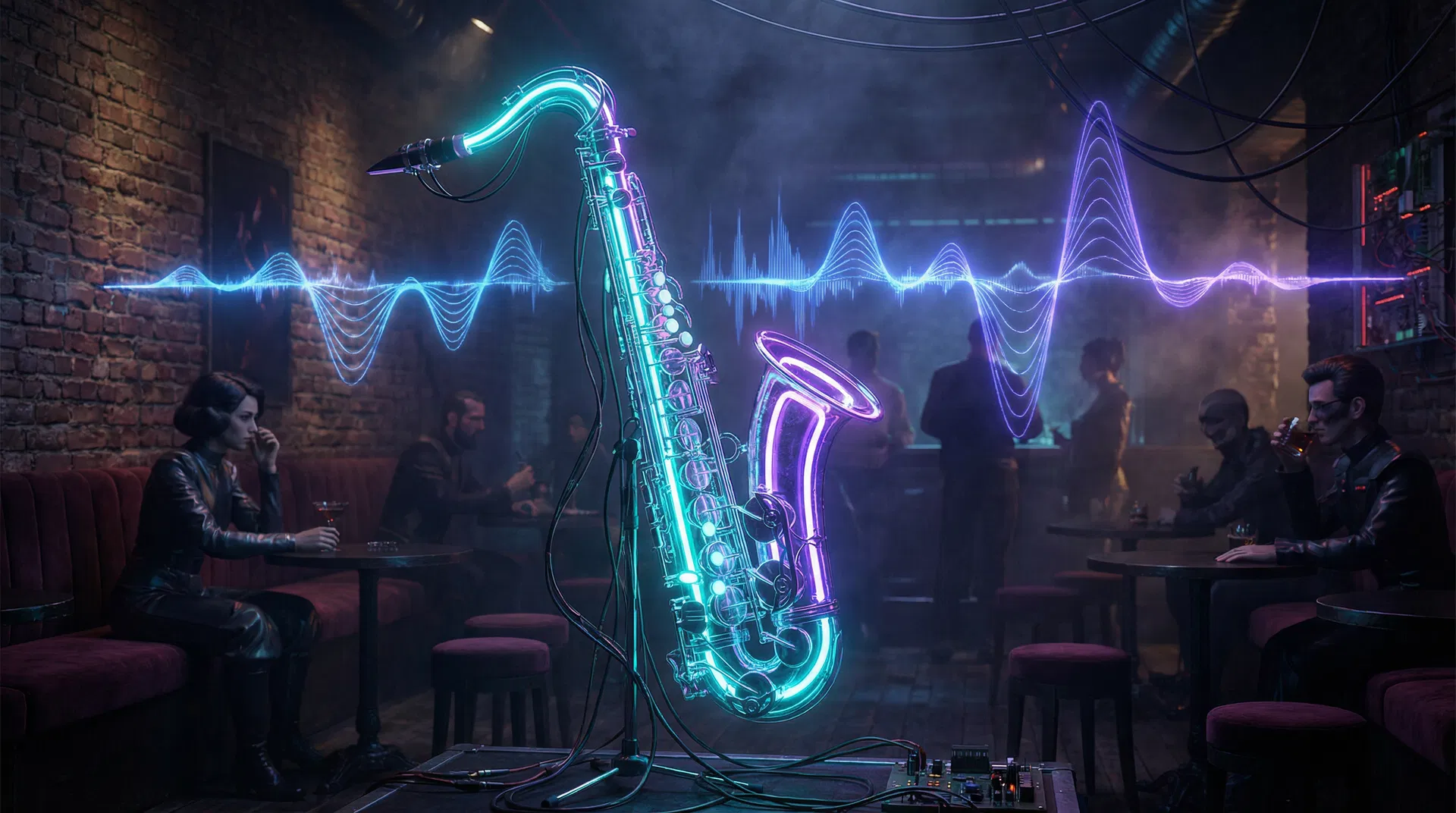
Es stellt sich heraus, dass es dafür einen wissenschaftlichen Grund gibt. Er nennt sich Stochastische Resonanz und erklärt, warum ein bisschen Chaos – wie ein Jazz-Saxophon-Solo – genau das sein könnte, was du brauchst, um deinen Flow zu finden.
Die "Goldlöckchen"-Zone deines Gehirns
Um zu verstehen, warum Jazz funktioniert, müssen wir uns das Yerkes-Dodson-Gesetz ansehen. Dieses psychologische Prinzip besagt, dass die Leistung mit physiologischer oder mentaler Erregung steigt, aber nur bis zu einem bestimmten Punkt.
Stell dir deinen Fokus wie eine Gitarrensaite vor:
- Zu locker (Unterstimulation): Die Saite schlabbert. Kein Ton. Das bist du in völliger Stille, gelangweilt und auf der Suche nach Ablenkung.
- Zu fest (Überstimulation): Die Saite reißt. Das bist du, wenn du versuchst zu arbeiten, während du Heavy Metal mit Texten hörst.
- Genau richtig (Optimale Erregung): Die Saite singt. Das ist der Sweet Spot.
Für viele Menschen, besonders solche mit ADHS-Tendenzen oder sehr schnellen Gehirnen, ist Stille unterstimulierend. Der Dopaminspiegel im Gehirn sinkt, und es beginnt hektisch nach etwas Interessantem zu suchen. Dieses "etwas Interessante" ist meistens Prokrastination.
Auftritt Jazz: Die Kunst des kontrollierten Chaos
Hier betritt der Jazz den Raum, mit Sonnenbrille drinnen.
Jazz, insbesondere Subgenres wie Cool Jazz oder Smooth Jazz, bietet eine einzigartige kognitive Umgebung. Wie in unserem Artikel über die Jazz-Atmosphäre besprochen, ist er komplex genug, um das unterbewusste Gehirn zu beschäftigen (und es davon abzuhalten, Ablenkungen zu suchen), aber nicht so aufdringlich, dass er deine bewusste Aufmerksamkeit fordert.
Dieses Phänomen ist verwandt mit der Stochastischen Resonanz. In der Physik beschreibt dies eine Situation, in der ein Signal, das zu schwach ist, um erkannt zu werden, durch Hinzufügen von weißem Rauschen verstärkt werden kann. In der Neurowissenschaft deutet es darauf hin, dass das Hinzufügen einer gewissen Menge an "Zufälligkeit" (wie die unvorhersehbare Synkope eines Jazz-Schlagzeugers) tatsächlich die Fähigkeit deines Gehirns schärfen kann, Informationen zu verarbeiten.
Warum "Predictive Coding" wichtig ist
Unsere Gehirne sind Vorhersagemaschinen. Wenn du einen einfachen Popsong hörst, durchschaut dein Gehirn das Muster schnell: Strophe, Refrain, Strophe, Refrain. Sobald das Muster gelöst ist, langweilt sich dein Gehirn.
Wenn du Free Jazz hörst, ist das Muster oft nicht existent. Dein Gehirn gerät in Panik und versucht, Ordnung zu finden. Zu viel Arbeit.
Aber Musik im JazzSphere-Stil sitzt genau in der Mitte. Sie verwendet "erweiterte Akkorde" (Nonen, Undezimen, Tredezimen), die reich und überraschend klingen, aber einer logischen Progression folgen. Dein Gehirn ist ständig in ein unterschwelliges Spiel von "was kommt als nächstes?" verwickelt, was dein Erregungsniveau in dieser optimalen Zone hält und deinen bewussten Verstand frei lässt, um zu programmieren, zu schreiben oder zu entwerfen.
Wie man Jazz für Deep Work nutzt
Nicht jeder Jazz ist gleich gut für Produktivität geeignet. Du willst wahrscheinlich keinen hektischen Bebop-Track mit 300 BPM, während du versuchst, komplexen Code zu debuggen. Hier ist mein Musiker-Rezept für die perfekte Jazz-Fokus-Session:
- Bleib instrumental: Gesang ist der Feind von Deep Work. Er kapert deine Sprachverarbeitungszentren.
- Such nach "Cool" oder "Modal" Jazz: Denk an die Ära von Miles Davis' Kind of Blue. Es ist weitläufig, atmend und ruhig.
- Umarme das Trio: Klavier, Bass, Schlagzeug. Diese klassische Besetzung bietet ein volles Frequenzspektrum, ohne matschig oder überwältigend zu werden.
- Probier unsere "JazzSphere"-Mixe: Ich kuratiere diese speziell, um ein stetiges Energieniveau zu halten. Keine plötzlichen lauten Trompetenstöße, die dich vom Stuhl springen lassen.
Also, das nächste Mal, wenn du merkst, dass dein Gehirn von der Aufgabe abrutscht, weil die Stille zu laut ist, zwing dich nicht, dich härter zu konzentrieren. Versuch es mit ein wenig Chaos. Leg etwas Jazz auf, lass dein Gehirn auf den komplexen Akkorden kauen, und sieh zu, wie deine Produktivität steigt.
Bereit, dein Gehirn zu testen?
Wir haben einen dedizierten Kanal für genau diese Art von "fokus-optimiertem" Jazz. Er ist warm, instrumental und darauf ausgelegt, dich im Flow zu halten.
Hör rein bei JazzSphere Radio🎧 Passende Musik zum Artikel
Von unserem Kanal: JazzSphere Radio
Vintage Stereo Jazz - Warm Lounge Vibes for Late-Night Productivity & Rest
TAGS
Share this article