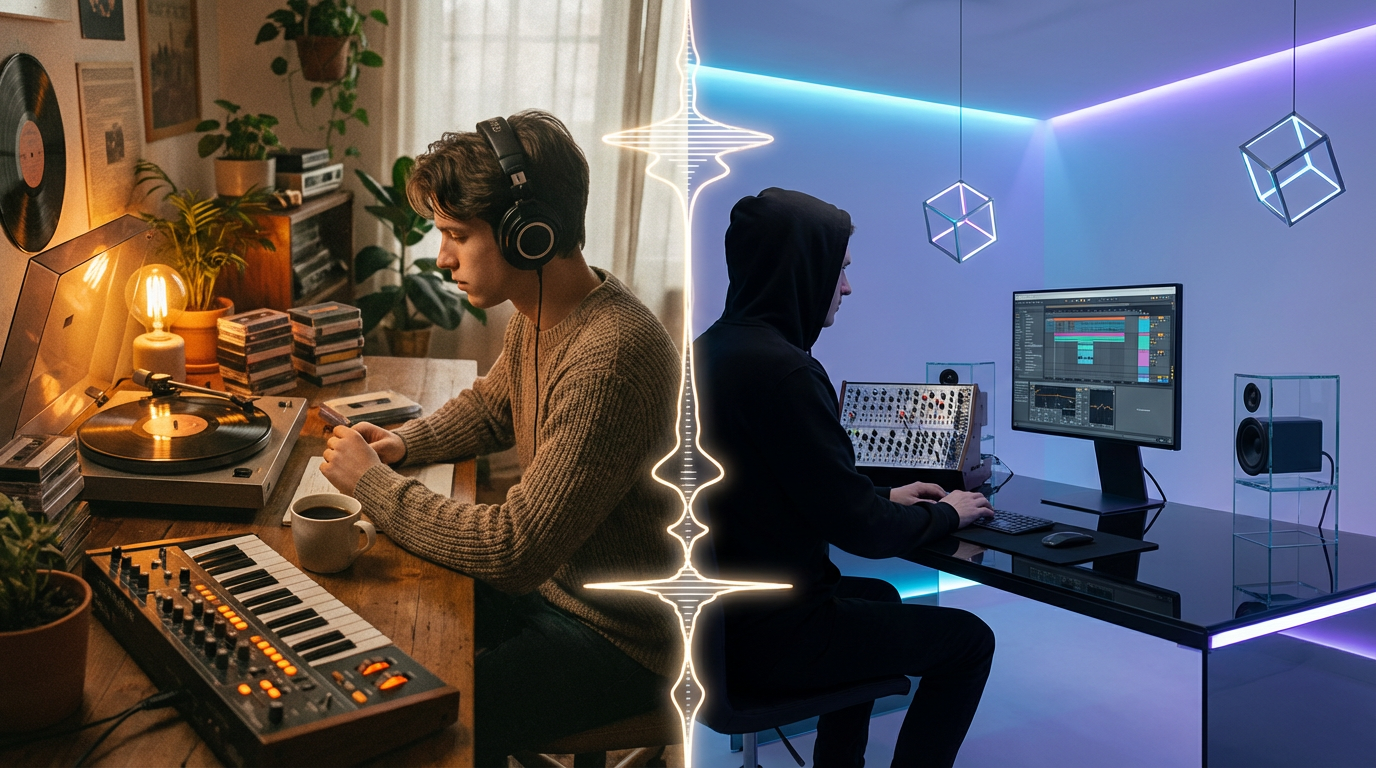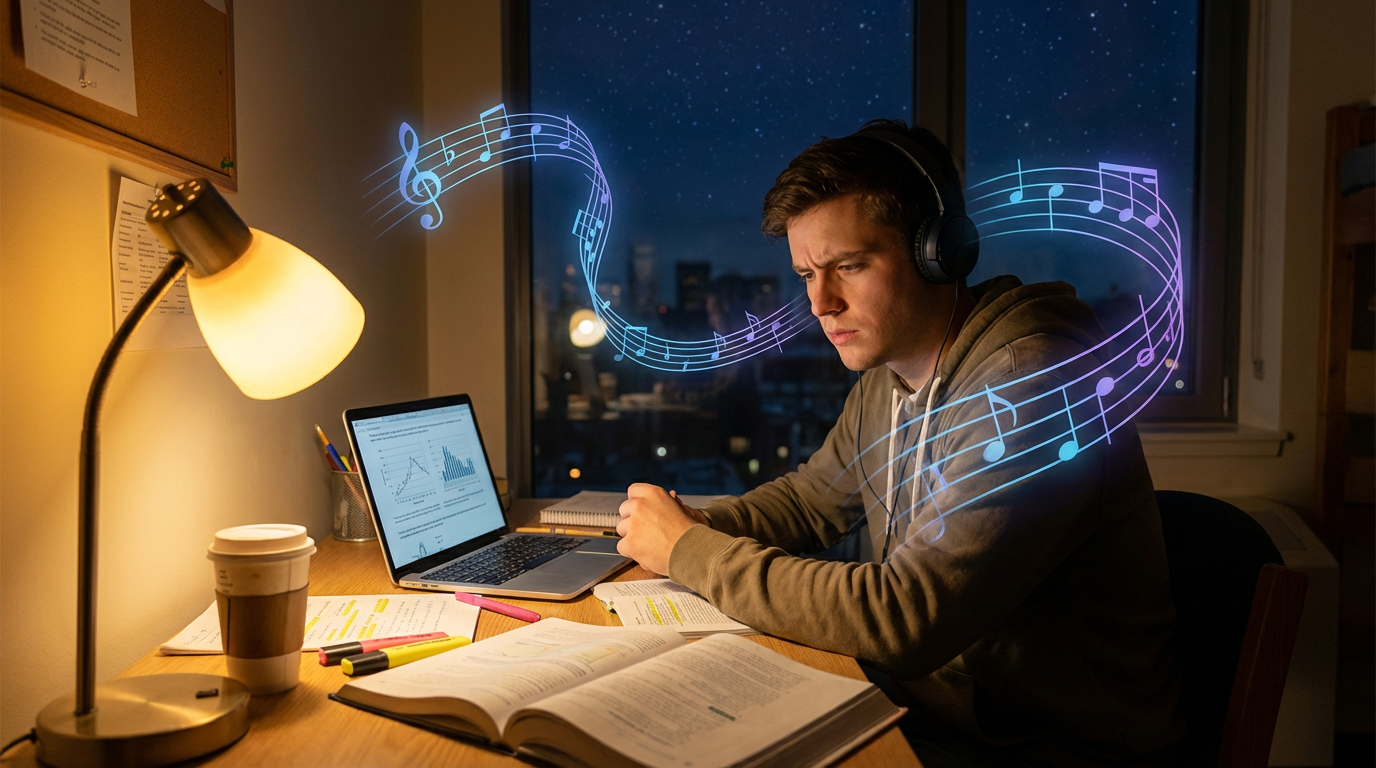
Es ist 23 Uhr. Deine Prüfung ist in 8 Stunden. Du hast noch drei Kapitel zu lernen, und dein Gehirn fühlt sich an wie Brei. Du öffnest Spotify, tippst "study music" ein und bekommst 47 Millionen Playlists. Welche funktioniert wirklich? Und warum schwört dein Mitbewohner auf Heavy Metal, während du komplette Stille brauchst?
Hier ist die Sache, die dir niemand sagt: Die Musik, die dir beim Vokabeln-Lernen hilft, ist NICHT dieselbe Musik, die dir bei Mathe-Aufgaben hilft. Es ist wie Laufschuhe im Schwimmbad zu tragen—technisch gesehen Schuhe, aber völlig falsch für den Job.
Lass mich teilen, was ich über Study Music gelernt habe, nachdem ich jahrelang Fokus-Soundscapes kreiert und mit Tausenden von Studenten gesprochen habe. Das ist nicht nur Theorie—es ist praktisches Zeug, das du heute Nacht nutzen kannst.
Das große Missverständnis über Study Music
Die meisten Leute denken, Study Music ist einfach "ruhiges Hintergrundgeräusch." Falsch.
Dein Gehirn ist wie ein Jongleur. Es kann nur so viele Bälle gleichzeitig in der Luft halten. Musik mit Lyrics hinzufügen? Das ist wie dem Jongleur einen weiteren Ball zuzuwerfen, während er bereits kämpft. Nicht hilfreich.
Aber hier wird es interessant: Die richtige Musik fügt keine Bälle hinzu—sie schafft einen Rhythmus, der das Jonglieren einfacher macht. Es ist der Unterschied zwischen Jonglieren im Chaos versus Jonglieren zu einem gleichmäßigen Beat.
Die vier Lernphasen (und ihre perfekten Soundtracks)
Stell dir vor: Du "lernst" nicht einfach. Du machst vier völlig unterschiedliche mentale Aktivitäten, die jeweils unterschiedliche Gehirnressourcen benötigen.
1. Leseverständnis: Der Stille-Liebhaber
Was du machst: Geschriebene Sprache verarbeiten, mentale Modelle bauen, Ideen verbinden.
Was dein Gehirn braucht: Maximale Sprachverarbeitungsleistung. Keine Konkurrenz.
Die Musik-Regel: Wenn es Worte hat, kämpft es mit deinem Gehirn um Sprachressourcen. Punkt.
Was wirklich funktioniert:
- Langsame Instrumentalmusik (60-70 BPM)
- Piano-Ambience ohne Melodien, die Aufmerksamkeit fordern
- Naturgeräusche mit minimaler Variation
- Unsere Deep Focus Ambient Soundscapes Playlist funktioniert hier perfekt
Warum es funktioniert: Das Sprachzentrum deines Gehirns bleibt frei, um das Lehrbuch zu dekodieren. Der sanfte Hintergrund füllt die Stille, ohne um Aufmerksamkeit zu konkurrieren. Es ist wie ein "Bitte nicht stören"-Schild für deinen Geist.
Pro-Tipp: Teste das heute Nacht. Lies eine Seite mit lyrischer Musik, dann lies eine andere mit Instrumental. Du wirst den Unterschied sofort spüren.
2. Auswendiglernen: Der Loop-Liebhaber
Was du machst: Informationen durch Wiederholung ins Langzeitgedächtnis kodieren.
Was dein Gehirn braucht: Vorhersehbarkeit und Rhythmus, um mentale "Haken" zu schaffen.
Die Musik-Regel: Repetitiv ist gut. Überraschend ist schlecht.
Was wirklich funktioniert:
- Lofi Beats mit konsistenten Loops
- Binaural Beats (Alpha-Wellen, 8-12 Hz)
- Einfache melodische Muster, die sich wiederholen
- Chillout-Musik mit minimaler Variation
Warum es funktioniert: Dein Gehirn liebt Muster. Wenn die Musik vorhersehbar ist, schafft sie eine stabile mentale Umgebung, in der neue Informationen haften bleiben können. Denk daran wie mentaler Klettverschluss—die Musik bietet die Haken.
Echte Studenten-Story: Ein Medizinstudent, den ich kenne, lernt Anatomie immer mit derselben 2-Stunden-Lofi-Playlist. Jetzt, wenn er diese Musik während Prüfungen hört, kommen die Informationen automatisch zurück. Sein Gehirn hat die Musik mit den Erinnerungen verknüpft.
3. Problemlösung: Der Energie-Booster
Was du machst: Aktives Denken, Hypothesen testen, komplexe Logik durcharbeiten.
Was dein Gehirn braucht: Anhaltende Energie ohne Ablenkung.
Die Musik-Regel: Moderates Tempo (70-90 BPM), strukturiert aber nicht fordernd.
Was wirklich funktioniert:
- Focus Ambient mit subtilen rhythmischen Elementen
- Elektronische Musik ohne Vocals
- Moderate-Tempo Piano-Stücke
- Strukturierte Soundscapes mit sanfter Progression
Warum es funktioniert: Problemlösung verbrennt schnell mentale Energie. Musik mit moderatem Tempo hält dein Erregungsniveau im Sweet Spot—wach genug zum Denken, ruhig genug zum Fokussieren. Zu langsam und du driftest ab. Zu schnell und du brennst aus.
Der Mathe-Test-Trick: Nutze etwas energischere Musik für Problemlösung als für Lesen. Dein Gehirn braucht diesen Extra-Push, um mit schwierigem Material engagiert zu bleiben.
4. Prüfungsvorbereitung: Die Komfortzone
Was du machst: Wiederholen, Stress-Management, Selbstvertrauen aufbauen.
Was dein Gehirn braucht: Vertrautheit und Ruhe.
Die Musik-Regel: Bleib bei dem, was du kennst. Das ist NICHT die Zeit, neue Musik zu entdecken.
Was wirklich funktioniert:
- Deine vertrautesten Lern-Playlists
- Beruhigende Piano-Ambience
- Chillout-Soundscapes, die du vorher genutzt hast
- Naturgeräusche, die sich tröstlich anfühlen
Warum es funktioniert: Prüfungsstress triggert deine Kampf-oder-Flucht-Reaktion. Vertraute Musik sagt deinem Gehirn "wir haben das schon gemacht, wir sind sicher." Es ist wie einen Freund im Raum zu haben.
Die Nacht-davor-Strategie: Nutze exakt dieselbe Musik, die du beim Lernen des Materials genutzt hast. Dein Gehirn wird die Musik mit der Information assoziieren, was das Erinnern während der Prüfung einfacher macht.
Die häufigen Fehler (und wie man sie behebt)
Fehler #1: Spotifys "Discover"-Modus beim Lernen nutzen
Warum es schlecht ist: Jeder neue Song erfordert, dass dein Gehirn ihn bewertet. "Mag ich das? Ist es zu laut? Was ist das für ein komisches Geräusch?" Das ist mentale Energie, die vom Lernen gestohlen wird.
Die Lösung: Erstelle eine 2-3 Stunden Playlist BEVOR du mit dem Lernen beginnst. Lass sie loopen. Langweilig ist gut.
Fehler #2: Musikstile mitten in der Session wechseln
Warum es schlecht ist: Dein Gehirn braucht Zeit, sich an neue Klangumgebungen anzupassen. Von Klassik zu Elektronik mitten im Lernen zu wechseln ist wie alle 20 Minuten in einen anderen Raum zu ziehen.
Die Lösung: Verpflichte dich zu einem Stil pro Lernsession. Passe die Musik zur Aufgabe an, dann bleib dabei.
Fehler #3: Lautstärke zu hoch
Warum es schlecht ist: Wenn du dich nicht selbst denken hören kannst, arbeitet die Musik gegen dich.
Die Lösung: Stelle die Lautstärke auf 30-40% des Maximums ein. Du solltest die Musik kaum bemerken. Es ist ein Hintergrund, keine Performance.
Fehler #4: Glauben "Ich arbeite besser mit Lyrics"
Warum es schlecht ist: Du fühlst dich vielleicht, als würdest du besser arbeiten, aber Forschung zeigt konsistent, dass Lyrics Verständnis und Gedächtnisleistung bei sprachbasierten Aufgaben reduzieren.
Die Lösung: Probiere eine Woche ohne Lyrics. Tracke deine tatsächlichen Ergebnisse (Quiz-Scores, gelesene Seiten, gelöste Probleme). Lass Daten, nicht Gefühle, entscheiden.
Die Wissenschaft (einfach gemacht)
Lass uns darüber reden, was tatsächlich in deinem Gehirn passiert, wenn du mit Musik lernst.
Cognitive Load Theory sagt, dass dein Gehirn begrenzte Verarbeitungsleistung hat. Jede Aufgabe nimmt etwas von dieser Leistung. Musik mit Lyrics nutzt deinen Sprachprozessor. Lesen nutzt auch deinen Sprachprozessor. Ergebnis? Konkurrenz. Keine Aufgabe bekommt volle Ressourcen.
Working Memory ist wie der Notizblock deines Gehirns. Es kann etwa 4-7 Items gleichzeitig halten. Komplexe oder überraschende Musik füllt diese Slots mit "was ist das für ein Sound?" statt "was ist diese Gleichung?"
Der Arousal Sweet Spot ist, wo dein Gehirn wach genug ist zum Fokussieren, aber ruhig genug zum klaren Denken. Musik hilft dir, diese Zone zu finden und zu halten. Zu leise und du driftest. Zu stimulierend und du zerstreust dich.
State-Dependent Memory bedeutet, du erinnerst dich besser an Dinge im selben Kontext, wo du sie gelernt hast. Lerne mit Piano-Musik, Erinnern wird einfacher mit Piano-Musik. Dein Gehirn verknüpft die beiden.
Nichts davon ist Raketenwissenschaft. Es geht nur darum zu verstehen, dass dein Gehirn Präferenzen hat, und mit ihnen statt gegen sie zu arbeiten.
Deine Study Music Strategie aufbauen
Hier ist dein Aktionsplan für heute Nacht:
Schritt 1: Identifiziere deine Aufgabe
- Lesen/Verständnis? → Langsam instrumental, keine Lyrics
- Fakten auswendig lernen? → Repetitive Loops, Binaural Beats
- Probleme lösen? → Moderates Tempo, strukturiert
- Für Prüfungen wiederholen? → Vertraut, beruhigend
Schritt 2: Erstelle deine Playlists
- Mache 4 Playlists (eine für jeden Aufgabentyp)
- Jede sollte 2-3 Stunden lang sein
- Teste sie eine Woche, passe basierend auf Ergebnissen an
Schritt 3: Stelle deine Umgebung ein
- Lautstärke bei 30-40%
- Kopfhörer, wenn du in einem lauten Raum bist
- Dieselbe Playlist für die gesamte Session
Schritt 4: Tracke was funktioniert
- Notiere, welche Musik dir am besten beim Fokussieren geholfen hat
- Achte auf deine tatsächlichen Ergebnisse, nicht nur wie du dich fühlst
- Passe basierend auf Daten an, nicht auf Annahmen
Das ehrliche Gespräch: Macht das wirklich einen Unterschied?
Schau, manche Leute können bei einem Rock-Konzert lernen. Andere brauchen Bibliotheks-Stille. Es gibt keine Einheitslösung.
Aber hier ist, was ich weiß, nachdem ich Fokus-Musik kreiert und von Tausenden von Hörern gehört habe: Die meisten Studenten haben nie systematisch mit Study Music experimentiert. Sie nehmen einfach, was populär ist, und hoffen, dass es funktioniert.
Der Unterschied zwischen zufälliger Musik und strategischer Musik ist nicht riesig für eine einzelne Lernsession. Aber über ein Semester? Über ein Studium? Diese kleinen Vorteile summieren sich.
Wenn bessere Musikwahlen dir helfen, 10% besser pro Session zu fokussieren, und du 20 Stunden pro Woche lernst, sind das 2 extra Stunden effektives Lernen pro Woche. Über ein Semester sind das 30 Stunden. Das ist eine ganze Woche Lernen, die du gratis bekommen hast, nur weil du schlauer mit deinem Soundtrack warst.
Deine nächsten Schritte
Heute Nacht, probiere dieses Experiment:
- Wähle ein Kapitel zum Lesen
- Lies die erste Hälfte mit deiner üblichen Musik
- Lies die zweite Hälfte mit reinem Instrumental-Ambient
- Morgen, quiz dich selbst über beide Hälften
Sieh, welche Hälfte besser hängen geblieben ist. Lass dein Gehirn dir sagen, was funktioniert.
Und wenn du erkunden möchtest, was ich als am besten funktionierend gefunden habe, schau dir unseren Deep Focus Sphere Kanal an für Soundscapes, die speziell für verschiedene Arten mentaler Arbeit designed sind. Wir haben Jahre damit verbracht, diese basierend auf Feedback von Studenten wie dir zu verfeinern.
Das Ziel ist nicht, die "perfekte" Study Music zu finden. Es ist, zu finden, was für DEIN Gehirn, für DEINE Aufgaben, in DEINER Umgebung funktioniert.
Jetzt geh und rocke diese Prüfung. Und ja, ich werde Ambient-Musik nutzen, während ich das mache.
🎧 Passende Musik zum Artikel
Von unserem Kanal: Deep Focus Sphere
2+ Hours of Deep Focus Music for Study, Work & Maximum Concentration
TAGS
Share this article