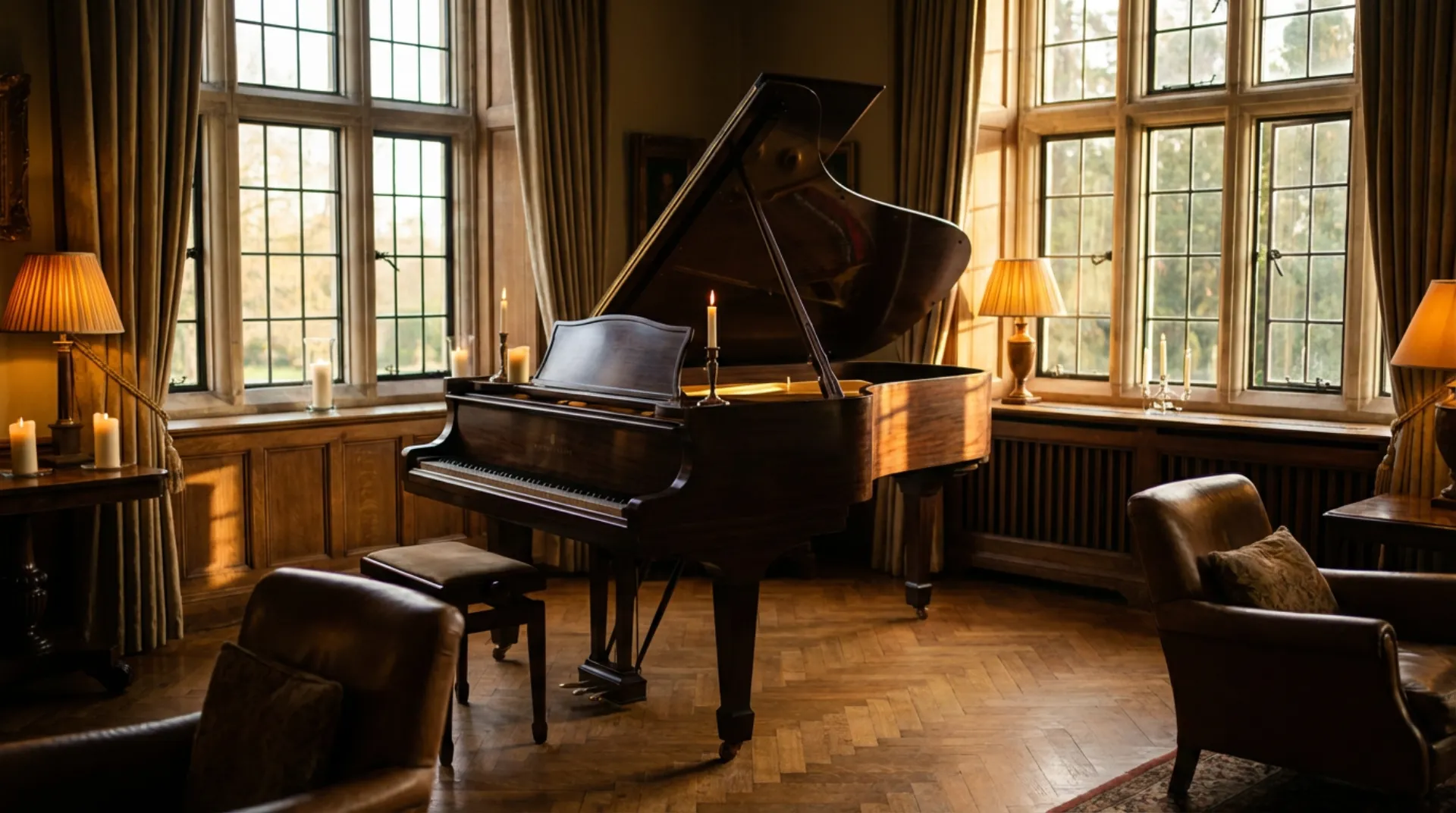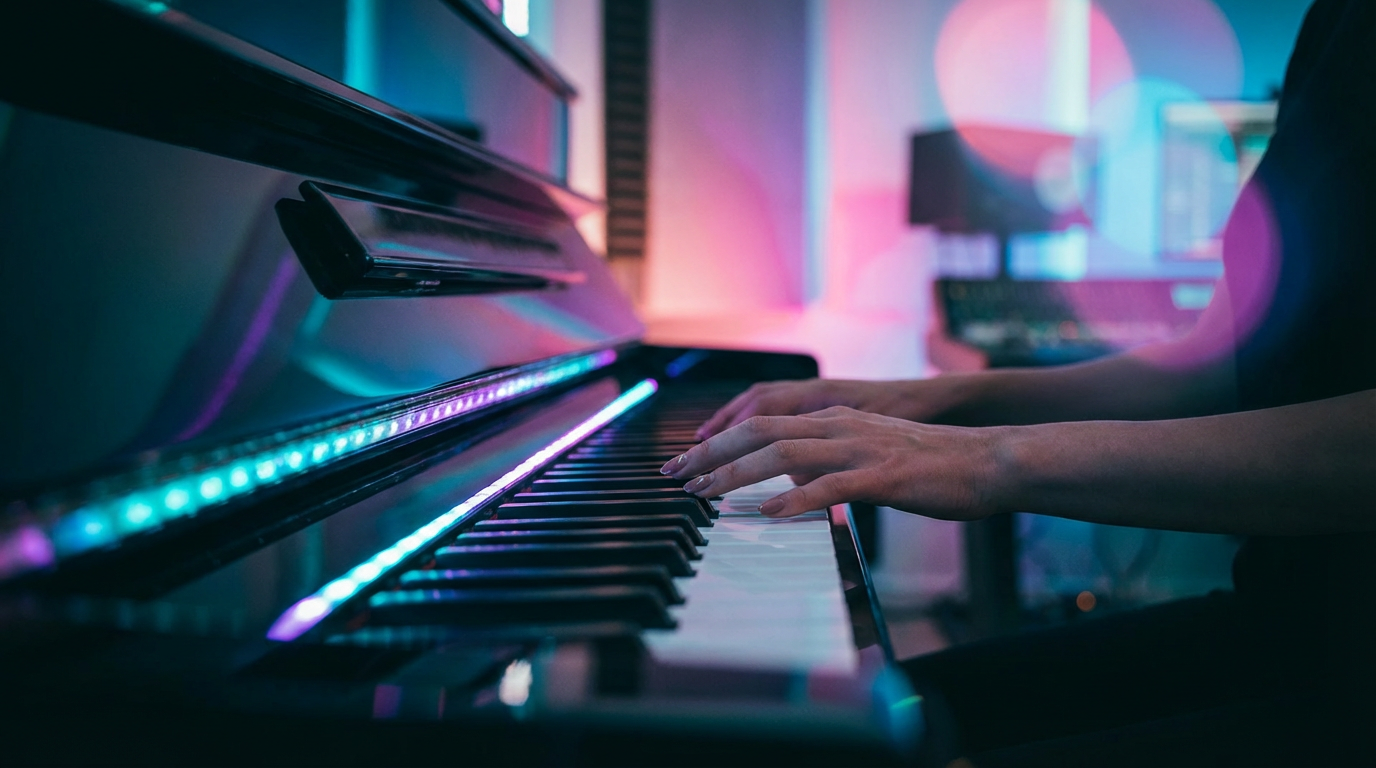
Ich habe 10 Jahre lang klassisches Klavier gelernt. Beethoven-Sonaten. Chopin-Nocturnes. Bach-Fugen. Das komplette Konservatoriums-Repertoire. Meine Finger können durch komplexe Harmonien und komplizierte Passagen navigieren, die die meisten Menschen für unmöglich halten würden.
Aber hier ist die Ironie, die mich immer noch zum Lachen bringt: Wenn ich nach einem stressigen Tag als Geschäftsführer nach Hause komme, höre ich nichts davon.
Ich lege simple Ambient-Piano-Loops auf. Drei Akkorde. Langsames Tempo. So repetitiv, dass die meisten klassischen Musiker es langweilig nennen würden.
Und es funktioniert besser als alles, was ich in 10 Jahren Ausbildung gelernt habe.
Das Chopin-Problem
Lass mich dir von dem Moment erzählen, als mir das klar wurde. Es war eine besonders brutale Woche auf der Arbeit. Meeting nach Meeting. Schwierige Kundenverhandlungen. Die Art von Woche, in der deine Schultern permanent angespannt sind und dein Kiefer selbst im Schlaf verkrampft ist.
Ich kam nach Hause, goss mir einen Drink ein und dachte: "Weißt du was? Ich werde jetzt schöne Klaviermusik hören. Etwas, das ich tatsächlich spielen kann."
Also legte ich Chopins Nocturne in Es-Dur, Op. 9 Nr. 2 auf. Eines der schönsten Stücke, die je geschrieben wurden. Ich kann es spielen. Ich habe es aufgeführt. Es ist wunderschön.
Und nach fünf Minuten war ich gestresster als vorher.
Nicht weil die Musik schlecht ist. Sie ist unglaublich. Aber mein Gehirn versuchte, jeder harmonischen Progression zu folgen. Die dynamischen Wechsel zu antizipieren. Die Phrasierung zu analysieren. Obwohl ich das nicht aktiv versuchte, konnte mein trainiertes Musiker-Gehirn nicht anders.
Es war wie der Versuch, sich zu entspannen, indem man einen Film in einer Sprache schaut, die man gerade lernt. Dein Gehirn versucht ständig zu übersetzen, anstatt einfach nur zu erleben.
Da verstand ich etwas, das mir meine Klavierlehrer nie beigebracht haben: Technische Komplexität ist der Feind der Entspannung.
Die Erik-Satie-Offenbarung
Am nächsten Abend versuchte ich etwas anderes. Ich legte Erik Saties Gymnopédie Nr. 1 auf.
Falls du es nicht kennst: Es sind im Grunde drei Akkorde, die vier Minuten lang langsam gespielt werden. Nach klassischen Maßstäben ist es fast peinlich einfach. Ich könnte es einem Anfänger in einer Woche beibringen.
Aber etwas Magisches passierte. Meine Schultern senkten sich. Meine Atmung verlangsamte sich. Dieses konstante mentale Geplapper, das den ganzen Tag gelaufen war, wurde endlich still.
Warum? Weil es nichts zu analysieren gab. Nichts zu antizipieren. Nur dasselbe sanfte Muster, das sich wiederholte und diesen sicheren Klangraum schuf, in dem mein Gehirn endlich loslassen konnte.
Satie verstand etwas, das Chopin, Beethoven und die meisten klassischen Komponisten verpasst haben: Manchmal ist die kraftvollste Musik die einfachste.
Die Wissenschaft (ohne die langweiligen Teile)
Hier ist, was tatsächlich in deinem Gehirn passiert, wenn du Klaviermusik hörst. Und ich verspreche, ich mache das interessant.
Wenn du eine Klaviertaste drückst, hörst du nicht nur eine Note. Du hörst diese komplexe Mischung aus harmonischen Obertönen—Frequenzen, die über der Haupttonhöhe mitschwingen. Es ist, als würdest du eine Note hören, aber fünf umsonst bekommen.
Diese Obertöne erzeugen diesen warmen, satten Klang, den dein Gehirn als natürlich beruhigend verarbeitet. Deshalb klingt ein Synthesizer, der dieselbe Note spielt, flach und künstlich. Ihm fehlen diese organischen Obertöne.
Jetzt kommt der coole Teil. Diese Obertöne aktivieren dein parasympathisches Nervensystem. Das ist der Teil deines Körpers, der für den "Ruhe-und-Verdauung"-Modus zuständig ist. Es ist buchstäblich das Gegenteil deiner Stressreaktion.
Klaviermusik klingt nicht nur entspannend. Sie sagt deinem Körper tatsächlich, dass er sich beruhigen soll.
Vergleiche das mit einer Gitarre. Wunderschönes Instrument. Ich spiele seit 20 Jahren Gitarre. Aber Gitarre hat einen schärferen Anschlag und kürzeres Sustain. Sie ist unmittelbarer. Aggressiver. Selbst akustische Gitarre hat diese Qualität, die dich leicht wach hält.
Klavier hat diese einzigartige Kombination aus weichem Anschlag und langem Ausklingen. Der Klang baut sich sanft auf und verblasst langsam. Es gibt deinem Gehirn Zeit, jede Note zu verarbeiten und sich in sie hinein zu entspannen, anstatt ständig von neuen Klängen aufgeschreckt zu werden.
Warum ich nicht höre, was ich spielen kann
Nach 10 Jahren klassischer Ausbildung würde man denken, ich würde die Meisterwerke hören, für die ich Jahre des Lernens investiert habe. Aber hier ist, was dir niemand über das Musiker-Sein erzählt: Du kannst den analytischen Teil deines Gehirns nicht abschalten.
Wenn ich eine Beethoven-Sonate höre, höre ich nicht nur zu. Ich analysiere die Form. Bemerke die Modulationen. Schätze die Stimmführung. Es ist wie ein Profi-Koch zu sein, der nicht in einem Restaurant essen kann, ohne mental jedes Gericht zu dekonstruieren.
Das ist großartig für aktives Zuhören. Zum Musik-Studieren. Um das Handwerk zu schätzen.
Aber es ist schrecklich für Stressbewältigung.
Also höre ich jetzt Ambient-Klaviermusik. Einfache Akkord-Progressionen. Minimale Melodien. Die Art von Zeug, die mich zu Tode langweilen würde, wenn ich sie üben müsste.
Und genau deshalb funktioniert es.
Der 60-80 BPM Sweet Spot
Es gibt diesen Tempo-Bereich, der sich fast magisch anfühlt für Stressbewältigung. Zwischen 60 und 80 Schlägen pro Minute. Weißt du warum? Weil das nahe an deiner Ruheherzfrequenz liegt.
Wenn du Musik in diesem Tempo hörst, passiert etwas, das "Entrainment" genannt wird. Deine Herzfrequenz synchronisiert sich natürlich mit der Musik. Langsame Musik gleich langsame Herzfrequenz gleich ruhiges Nervensystem.
Ich habe das öfter an mir selbst getestet, als ich zählen kann. Nach einem Tag voller Meetings lege ich einen 70-BPM-Klaviertrack auf. Innerhalb von fünf Minuten—buchstäblich fünf Minuten—kann ich spüren, wie meine Schultern sich senken und meine Atmung sich verlangsamt.
Das ist kein Placebo. Das ist kein Wunschdenken. Das ist dein Körper, der auf einen physischen Stimulus reagiert.
Die meiste klassische Klaviermusik ist entweder zu langsam (macht dich schläfrig) oder zu variabel im Tempo (hält dich wach). Aber Ambient-Piano sitzt in diesem perfekten Sweet Spot. Konsistent. Vorhersehbar. Beruhigend.
Mein 15-Minuten-Reset-Ritual
Lass mich teilen, was tatsächlich für mich funktioniert. Wenn ich von der Arbeit nach Hause komme, springe ich nicht sofort zum Abendessen oder schalte den Fernseher ein. Ich nehme mir 15 Minuten. Nur 15 Minuten.
Die ersten fünf Minuten höre ich pures Ambient-Piano. Keine Melodie. Nur Akkorde, die ineinander fließen. Das ist die Dekompressions-Phase. Mein Gehirn muss nichts verfolgen. Es kann einfach nur existieren.
Minuten sechs bis zehn wechsle ich zu neo-klassischem Klavier. Ludovico-Einaudi-Stil. Einfache Melodien. Repetitive Strukturen. Emotional, aber nicht überwältigend. Das ist die sanfte Wieder-Engagement-Phase. Mein Gehirn ist bereit für etwas etwas Interessanteres.
Die letzten fünf Minuten höre ich langsamen Jazz-Piano. Bill-Evans-Balladen. Keith Jarretts Solo-Arbeit. Komplexe Harmonie, aber langsam genug, um entspannend zu bleiben. Das ist die kreative Entspannungs-Phase. Ich bin jetzt ruhig genug, um etwas Anspruchsvolleres zu schätzen.
Nach Minute 15 bin ich ein anderer Mensch. Der Stress ist weggeschmolzen. Ich bin bereit, mich mit meiner Familie zu beschäftigen, zu kochen, an kreativen Projekten zu arbeiten. Was auch immer meine Aufmerksamkeit braucht.
Der Schlüssel ist die Progression. Wenn ich versuchen würde, mit Jazz zu starten, würde es nicht funktionieren. Mein Gehirn wäre noch im Arbeitsmodus und würde Akkordwechsel analysieren. Aber nach 10 Minuten Ambient-Piano bin ich bereit für etwas Interessanteres.
Der Fehler, den jeder macht
Hier ist, was ich Leute ständig falsch machen sehe. Sie legen eine "entspannende Klavier"-Playlist auf, und sie ist voll mit langsamen Pop-Songs, die für Klavier arrangiert wurden.
Das Problem? Selbst ohne Lyrics kennt dein Gehirn diese Songs. Es antizipiert die Melodie. Singt im Kopf mit. Aktiviert deine Sprachzentren.
Echte Stressbewältigungs-Klaviermusik sollte nur instrumental sein. Keine Vocals. Keine implizierten Lyrics. Keine vertrauten Melodien, die dich mental mitsingen lassen.
Und hier ist der andere Fehler: dramatische Dynamik. Diese schönen klassischen Stücke, die von flüsterleise zu donnernd laut gehen? Sie halten dich wach. Jedes Mal, wenn die Musik laut wird, spannt sich dein Körper leicht an. Jedes Mal, wenn sie leise wird, wartest du auf das nächste Crescendo.
Echte Stressbewältigungs-Klaviermusik sollte konsistent in der Lautstärke sein. Minimale Dynamik. Keine Überraschungen. Nur eine stetige, sanfte Präsenz.
Warum ich Ambient-Klaviermusik kreiere (trotz klassischer Ausbildung)
Das bringt mich dazu, warum ich Pianosphere Radio gestartet habe. Nach 10 Jahren klassischer Ausbildung dachte ich, ich würde Beethoven-Sonaten auf YouTube aufführen. Meine Technik zeigen. Beweisen, dass ich das schwierige Zeug spielen kann.
Aber dann realisierte ich etwas: Die Leute brauchen nicht mehr Virtuosität. Sie brauchen mehr Ruhe.
Die Welt hat genug talentierte Pianisten, die Rachmaninoff-Konzerte aufführen. Was sie braucht, ist mehr Musik, die Menschen tatsächlich hilft, sich besser zu fühlen.
Also nutze ich KI-Tools—ja, Suno AI—um Ambient-Piano-Tracks zu erstellen, die den Prinzipien folgen, die ich durch Jahre des Experimentierens entdeckt habe. Langsame Tempi. Repetitive Strukturen. Minimale Dynamik. Harmonische Einfachheit.
Manche Leute fragen mich: "Aber du kannst doch Klavier spielen. Warum KI nutzen?"
Hier ist warum: Ich versuche nicht, meine Technik zu zeigen. Ich versuche, die effektivste Stressbewältigungs-Musik zu kreieren, die möglich ist. Und manchmal ist die effektivste Musik die einfachste. KI hilft mir, diese Einfachheit im großen Maßstab zu erstellen, sodass ich stundenlange ununterbrochene Klaviermusik für Menschen bereitstellen kann, die sie brauchen.
Es ist wie ein Koch zu sein, der weiß, wie man aufwendige Fünf-Gänge-Menüs macht, aber sich entscheidet, das einfache Comfort Food zu perfektionieren, das Menschen tatsächlich glücklich macht.
Die Ironie der klassischen Ausbildung
Nach 10 Jahren des Lernens komplexer klassischer Stücke bin ich zum Ausgangspunkt zurückgekehrt. Die Musik, die ich zur Stressbewältigung kreiere und höre, ist das Gegenteil von allem, wofür ich ausgebildet wurde.
Keine Virtuosität. Keine dramatische Dynamik. Keine komplexen Harmonien. Kein Angeben.
Nur einfache, repetitive, beruhigende Klaviermusik.
Und weißt du was? Das ist okay. Denn das Ziel ist nicht, jemanden zu beeindrucken. Das Ziel ist, Menschen—mich eingeschlossen—zu helfen, sich besser zu fühlen.
Als ich 15 war und am Klavier saß und Beethoven-Sonaten lernte, dachte ich, Musik sei technische Perfektion. Darum, die schwersten Stücke zu spielen. Darum, zu beweisen, dass man tun kann, was andere nicht können.
Jetzt, mit 35, ein Unternehmen führend und mit echtem Stress umgehend, weiß ich es besser. Musik geht darum, wie sie dich fühlen lässt. Und manchmal sind drei einfache Akkorde, langsam gespielt, kraftvoller als die komplexeste Sonate, die je geschrieben wurde.
Wenn du diese Art von Klaviermusik erleben möchtest, schau dir Pianosphere Radio an. Ich erstelle stundenlange Ambient- und neo-klassische Klaviermusik speziell für Stressbewältigung, Fokus und Entspannung.
Denn manchmal ist die kraftvollste Musik die einfachste. Und manchmal ist die beste Nutzung von 10 Jahren klassischer Ausbildung zu wissen, wann man alles ignorieren sollte, was man gelernt hat.
🎧 Passende Musik zum Artikel
Von unserem Kanal: Pianosphere Radio
Sophisticated Fireplace Piano - Relaxing Piano Music with Ocean Sounds for Focus
TAGS
Share this article