Du lässt dich auf die Couch fallen, öffnest Netflix und denkst, du entspannst. Dein Cortisol-Spiegel sieht das anders.
Ich habe das früher jeden Abend gemacht. Nach einem langen Tag als Geschäftsführer schnappte ich mir die Fernbedienung, scrollte zwanzig Minuten durch Streaming-Dienste (ironischerweise stressig), wählte etwas aus, das ich schon kannte, und schaltete ab. Zwei Stunden später fühlte ich mich... nichts. Nicht erfrischt. Nicht aufgeladen. Nur taub.
Dann maß ich meine Herzfrequenzvariabilität. Es stellte sich heraus: Mein Körper war immer noch im Arbeitsmodus. Mein Nervensystem hatte nicht mitbekommen, dass der Arbeitstag vorbei war.
Da wurde mir klar: Die meisten von uns wissen nicht wirklich, wie man entspannt. Wir verwechseln „nicht arbeiten" mit „entspannen". Das ist nicht dasselbe.
Das Netflix-Paradoxon
Hier ist die unbequeme Wahrheit: Passive Bildschirmzeit senkt Cortisol nicht.
Eine Studie aus dem Jahr 2018 im Journal of Environmental Psychology fand heraus, dass Menschen, die nach der Arbeit fernsahen, keine signifikante Abnahme der Stresshormone zeigten im Vergleich zu denen, die einfach nur in Stille saßen. In einigen Fällen stiegen die Cortisol-Werte während Binge-Watching-Sessions sogar an.
Warum? Weil dein Gehirn im Input-Modus bleibt. Es verarbeitet weiterhin Informationen, verfolgt Handlungsstränge, reagiert auf Reize. Das sympathische Nervensystem (deine „Kampf-oder-Flucht"-Reaktion) bleibt teilweise aktiviert. Du arbeitest nicht, aber du ruhst auch nicht.
Ich sehe das in meinen eigenen Analysen. Wenn ich spät abends meine YouTube-Kanäle checke, bleibt meine Herzfrequenz erhöht. Wenn ich Musik von Chillout Sphere oder Pianosphere Radio höre, sinkt sie innerhalb von zehn Minuten. Dieselbe Couch. Dieselbe Tageszeit. Völlig unterschiedliche physiologische Reaktion.
Aktive vs. passive Entspannung
Das parasympathische Nervensystem – der „Ruhe-und-Verdauungs"-Modus deines Körpers – aktiviert sich nicht automatisch. Du musst es signalisieren.
Stell es dir so vor: Dein Nervensystem ist ein Auto. Nach einer langen Fahrt (deinem Arbeitstag) ist der Motor noch heiß. Du kannst nicht einfach die Zündung ausschalten und sofortige Abkühlung erwarten. Du brauchst eine Abkühlphase. Aktive Entspannung ist diese Abkühlphase.
Passive Entspannung (Netflix, Social Media scrollen, im Bett liegen und die Decke anstarren) ist wie das Auto mit laufendem Motor zu parken. Du bist stationär, aber das System ist noch aktiv.
Aktive Entspannung (Musik, tiefes Atmen, sanfte Bewegung, Meditation) ist wie den Motor auszuschalten und die Motorhaube zu öffnen. Du gibst deinem System die Erlaubnis herunterzufahren.
Musik ist eines der effektivsten aktiven Entspannungswerkzeuge, weil sie deinem Gehirn etwas gibt, worauf es sich konzentrieren kann, das nicht arbeitsbezogen ist, aber auch nicht kognitiv anspruchsvoll. Es ist eine sanfte Umleitung.
Der 20-Minuten-Downshift
Dein Körper braucht Zeit, um vom Arbeitsmodus in den Entspannungsmodus zu wechseln. Neurowissenschaftler nennen dies die „Downshift-Periode". Es dauert etwa zwanzig bis dreißig Minuten, bis die Cortisol-Werte nach einem stressigen Ereignis sinken.
Die meisten Menschen überspringen dieses Zeitfenster komplett. Sie gehen direkt vom Laptop-Zuklappen zum Netflix-Öffnen. Oder vom Meeting-Ende zum Instagram-Scrollen. Es gibt keinen Puffer. Keinen Übergang. Kein Signal an das Nervensystem, dass es sicher ist zu entspannen.
Ich habe das auf die harte Tour gelernt. Früher beendete ich die Arbeit um 18 Uhr und checkte sofort E-Mails auf meinem Handy, „nur um auf dem Laufenden zu bleiben". Um 20 Uhr fühlte ich mich gleichzeitig aufgedreht und erschöpft. Klassisches Burnout-Symptom.
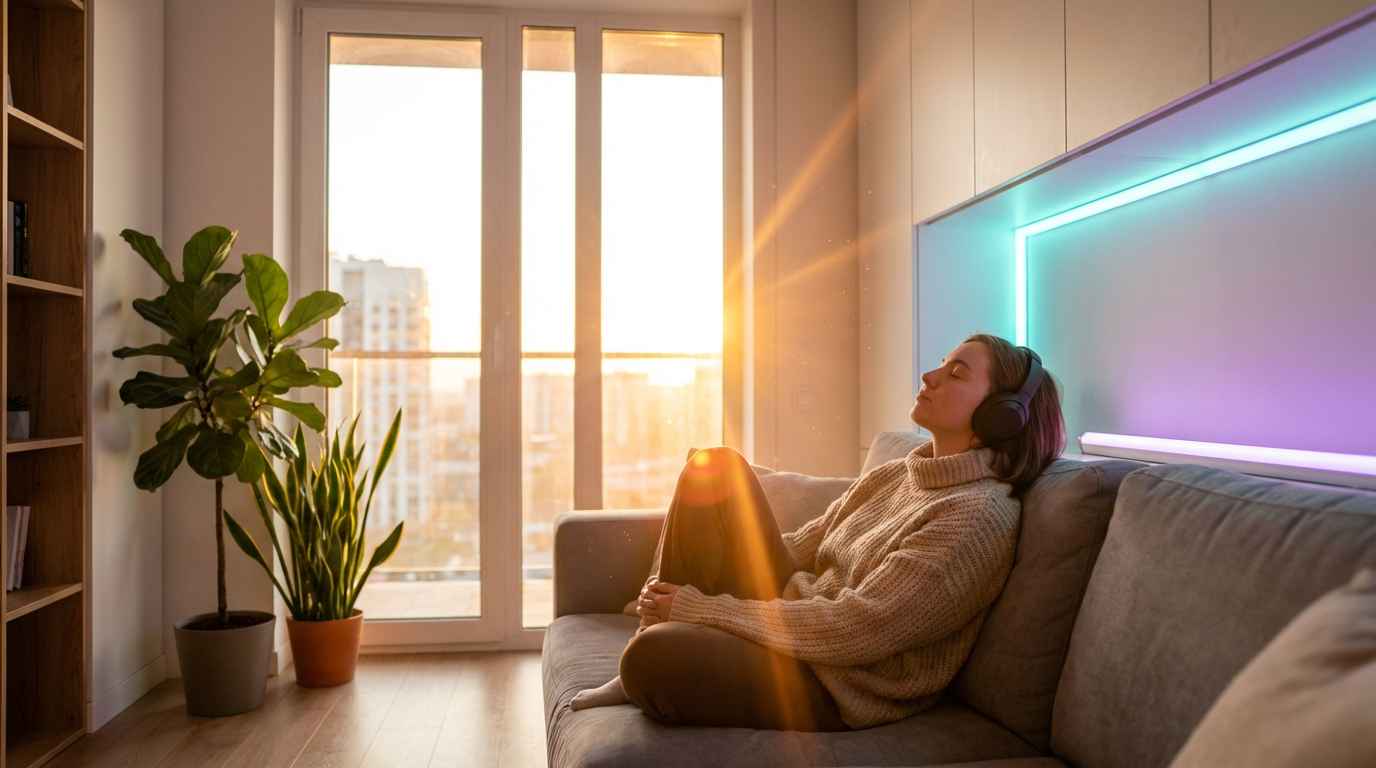
Jetzt habe ich eine nicht verhandelbare Regel: Die ersten zwanzig Minuten nach der Arbeit sind nur für Musik. Keine Bildschirme. Keine Aufgaben. Keine Entscheidungen. Nur ich, meine Kopfhörer und Chillout Sphere. Ich sitze auf meiner Couch, schließe die Augen und lasse die Musik ihre Arbeit tun.
Innerhalb von zehn Minuten kann ich fühlen, wie meine Herzfrequenz sinkt. Meine Schultern fallen. Mein Kiefer entspannt sich. Nach zwanzig Minuten bin ich tatsächlich entspannt. Nicht taub. Nicht abgelenkt. Entspannt.
Die BPM-Falle
Nicht alle „Entspannungsmusik" entspannt dich tatsächlich.
Deine Herzfrequenz synchronisiert sich natürlich mit dem Tempo der Musik, die du hörst. Dieses Phänomen nennt sich rhythmisches Entrainment. Wenn du Musik mit 110 Schlägen pro Minute (BPM) hörst, wird dein Herz allmählich schneller, um sich anzupassen. Wenn du Musik mit 60 BPM hörst, wird dein Herz langsamer.
Hier ist das Problem: Viele populäre „Chill"-Playlists enthalten Lo-Fi-Beats mit 90-110 BPM. Das ist schneller als deine Ruheherzfrequenz (die für die meisten Erwachsenen bei etwa 60-80 BPM liegen sollte). Also während sich die Stimmung entspannt anfühlt, wird dein Körper tatsächlich stimuliert.
Ich habe das selbst getestet. Ich trug einen Herzfrequenzmesser während ich verschiedene Playlists hörte. Lo-Fi-Beats hielten meine Herzfrequenz bei etwa 85-90 BPM. Jazz von JazzSphere Radio brachte sie auf 70 BPM runter. Ambient-Piano von Pianosphere Radio? 62 BPM. Das ist der Unterschied zwischen „irgendwie chill" und „tatsächlich entspannt".
Wenn du wirklich entspannen willst, such nach Musik zwischen 60-80 BPM. Das ist der Sweet Spot für parasympathische Aktivierung.
Die Vagus-Nerv-Verbindung
Der Vagusnerv ist die Entspannungs-Autobahn deines Körpers. Er verläuft vom Hirnstamm bis zum Bauch und verbindet dein Gehirn mit Herz, Lunge und Verdauungssystem. Wenn er aktiviert wird, löst er die parasympathische Reaktion aus: langsamere Herzfrequenz, tiefere Atmung, niedrigerer Blutdruck.
Musik ist eine der zuverlässigsten Methoden, den Vagusnerv zu stimulieren.
Eine Studie aus dem Jahr 2016 in Frontiers in Psychology fand heraus, dass das Hören langsamer, harmonischer Musik den Vagustonus (ein Maß für Vagusnerv-Aktivität) innerhalb von fünfzehn Minuten erhöhte. Die Teilnehmer berichteten, sich ruhiger zu fühlen, und ihre Herzfrequenzvariabilität – ein Schlüsselindikator für Stressresilienz – verbesserte sich signifikant.
Das ist kein Placebo. Das ist messbare, physiologische Veränderung.
Wenn ich nach der Arbeit Jazz oder Ambient-Piano höre, „vibe" ich nicht nur. Ich aktiviere aktiv meinen Vagusnerv. Ich sage meinem Nervensystem: Es ist jetzt sicher zu entspannen.
Warum Stille nicht funktioniert (für die meisten Menschen)
Man würde denken, komplette Stille wäre das ultimative Entspannungswerkzeug. Keine Reize. Keine Ablenkungen. Nur Frieden.
Aber für die meisten Menschen ist Stille tatsächlich stressig.
Wenn es keinen Umgebungssound gibt, geht dein Gehirn in den Hypervigilanz-Modus. Es beginnt nach Bedrohungen zu scannen. Jedes Knarren, jede entfernte Autohupe, jeder Schritt des Nachbarn wird verstärkt. Du entspannst nicht – du bist auf der Hut.
Psychologen nennen dies „akustische Hypervigilanz". Es ist ein evolutionäres Überbleibsel. In der Natur bedeutete Stille oft Gefahr. Unsere Vorfahren lernten, ruhigen Umgebungen zu misstrauen.
Deshalb funktioniert Ambient-Musik so gut. Sie ist nicht laut genug, um Aufmerksamkeit zu fordern, aber präsent genug, um deinem Gehirn etwas zu geben, woran es sich festhalten kann. Es ist eine „akustische Decke", die zufällige Geräusche maskiert und ein Gefühl von Sicherheit schafft.
Früher versuchte ich, in kompletter Stille zu meditieren. Ich hielt etwa drei Minuten durch, bevor mein Geist anfing zu rasen. Jetzt meditiere ich mit sanfter Klaviermusik im Hintergrund. Ich schaffe zwanzig Minuten ohne Anstrengung.
Der Ritual-Effekt
Dein Gehirn liebt Muster. Wenn du jeden Tag dieselbe Entspannungsroutine wiederholst, lernt dein Nervensystem, sie zu antizipieren. Das nennt sich konditionierte Entspannung – im Grunde Pawlows Hund, aber für Stressabbau.
Wenn du jeden Abend zur gleichen Zeit dieselbe Playlist hörst, wird dein Gehirn anfangen sich zu entspannen, sobald die Musik startet. Du trainierst dein Nervensystem, auf einen Hinweis zu reagieren.
Meine Abendroutine ist peinlich einfach:
18:00 Uhr: Laptop zuklappen. Keine Ausnahmen.
18:05 Uhr: Auf Couch setzen. Kopfhörer auf.
18:06 Uhr: Play drücken bei Chillout Sphere.
18:26 Uhr: Tatsächlich entspannt.
Die erste Woche fühlte es sich erzwungen an. In Woche zwei begann mein Körper es zu antizipieren. Jetzt, in dem Moment, in dem ich diese Eröffnungsakkorde höre, fallen meine Schultern automatisch. Ich muss nicht mehr versuchen zu entspannen. Mein Nervensystem kennt den Ablauf.
Die Harmonik des Loslassens
Es gibt einen Grund, warum Jazz und Ambient-Musik besser für Entspannung funktionieren als klassische Musik.
Klassische Musik ist auf Spannung und Auflösung aufgebaut. Ein Akkord erzeugt Erwartung, dann löst er sich auf. Dein Gehirn sagt ständig voraus, was als Nächstes kommt. Es ist schön, aber es ist auch kognitiv anspruchsvoll. Du arbeitest, auch wenn du es nicht merkst.
Jazz und Ambient-Musik nutzen harmonische Mehrdeutigkeit. Akkorde lösen sich nicht so auf, wie du es erwartest. Es gibt keine „richtige Antwort". Dein Gehirn kann die nächste Note nicht vorhersagen, also hört es auf zu versuchen. Es lässt los.
Ich habe zehn Jahre klassisches Klavier gelernt. Beethoven, Chopin, Debussy. Ich kann ein Chopin-Nocturne auswendig spielen. Aber wenn ich entspannen muss, spiele ich nicht Chopin. Ich höre Chet Baker.
Weil Chopin etwas von mir verlangt. Baker existiert einfach. Es gibt keine Spannung aufzulösen. Keine Struktur zu folgen. Nur Klang, der treibt.
So fühlt sich Entspannung tatsächlich an. Nicht Leistung. Nicht Auflösung. Nur... treiben.
Was tatsächlich funktioniert
Wenn du entspannen willst – nicht nur „nicht arbeiten", sondern tatsächlich dein parasympathisches Nervensystem aktivieren und dein Cortisol senken – hier ist, was die Wissenschaft sagt:
Finde Musik zwischen 60-80 BPM. Das entspricht deiner Ruheherzfrequenz und fördert rhythmisches Entrainment.
Schaffe einen zwanzigminütigen Puffer zwischen Arbeit und allem anderen. Keine Bildschirme. Keine Aufgaben. Nur Musik.
Nutze jeden Tag dieselbe Playlist. Trainiere dein Nervensystem, den Hinweis zu erkennen.
Wähle harmonische Mehrdeutigkeit statt Struktur. Jazz, Ambient, Chillout – alles, was keine Auflösung verlangt.
Sitz still. Mach kein Multitasking. Scroll nicht. Hör einfach zu.
Gib ihm zwei Wochen. Dein Gehirn braucht Zeit, das Muster zu lernen.
Ich sage nicht, dass Netflix böse ist. Ich sage, es ist keine Entspannung. Es ist Ablenkung. Und Ablenkung ist keine Erholung.
Wenn du dich wirklich von deinem Tag erholen willst, musst du deinem Nervensystem ein klares Signal geben. Musik ist dieses Signal.
Versuch es heute Abend. Klappe deinen Laptop zu. Setz Kopfhörer auf. Drück Play bei etwas Langsamem und Ambient. Sitz zwanzig Minuten. Check nicht dein Handy. Plan nicht morgen. Atme einfach.
Dein Cortisol-Spiegel wird es dir danken.
🎧 Passende Musik zum Artikel
Von unserem Kanal: Chillout Sphere
Ocean Lounge Escape - 2 Hours of Soothing Chillout Music to Unwind & Breathe
TAGS
Share this article